Try these Pan Fried Spanish Cauliflower Tapas [Read more…] about Pan Fried Spanish Cauliflower Tapas
Blog
Grilled Honey Mustard Chicken Skewers
Ingredients
- 2 large free range organic chicken breasts
- 1/2 cup yellow mustard
- 3 tablespoons liquid honey
- 1 clove garlic minced
- Salt & pepper to taste
Instructions
- If you’re using wooden skewers, it’s a good idea to soak them for at least half an hour to help prevent splintering and burning.
- Cut the chicken into fairly small pieces and trim off any fat/gristle. Place it in a medium-to-large bowl.
- Add the mustard, honey, garlic, and salt & pepper to a bowl (or just stir it right into the measuring cup you used to measure the mustard in). Stir until smooth. Pour it over the chicken, and give the chicken a stir so it’s coated.
- Refrigerate the chicken for at least an hour, preferably 2+ hours. If marinating overnight, cover it with plastic wrap.
- Once your chicken is done marinating, oil your BBQ/grill’s grate and pre-heat it to high. Thread the chicken onto skewers. Pour any extra marinade over them.
- Reduce heat to medium-high. Cook the chicken for about 15 minutes total time (or until it’s cooked through), turning every few minutes. We used our gas BBQ, cooking the chicken with the lid down.
Turkey Bacon Wrapped Almond Stuffed Dates
Ingredients
- 15 Medjool pitted dates
- 15 Marcona almonds
- 5-8 slices nitrate free organic bacon or turkey bacon (cut into halves or thirds, depending on size of dates)
Instructions
- Preheat the oven to 400 degrees F. Line a sheet tray with silicone baking mat or parchment paper.
- Make an incision on one side of each date and insert an almond. Squeeze the date shut in your hand to secure.
- Wrap each date with a bacon strip.
- Place all the dates on the prepared sheet tray, seam side down. Roast the dates in the oven until the bacon on top is starting to crisp – 5 to 6 minutes. Turn the dates over and cook for an additional 5 to 6 minutes.
- Serve hot and enjoy!
Sweet Patatas Bravas with Garlic Aioli
INGREDIENTS
- 1 1/2 pounds sweet potatoes cut into thin slices and quartered
- 3 tablespoons avocado oil
- Sea salt and pepper
- Fresh parsley
- Spanish paprika
- Ground cumin
- 3 garlic cloves, pressed
- 1/2 cup avocado mayonnaise
- 2 tablespoons olive oil
- 1 1/2 tablespoons fresh lime juice
INSTRUCTIONS:
Garlic Aioli: Combine the pressed garlic, mayonnaise, olive oil, lime juice, and sea salt and pepper to taste in a blender or food processor and process until smooth and creamy. Allow the aioli to sit in the refrigerator for at least an hour before serving. This can be made ahead.
Make the Sweet Patatas Bravas: Boil the cut sweet potatoes in salted water until they are just tender, about 10 minutes. Drain and let dry.
Heat a cast iron pan with 3 tablespoons of avocado oil until very hot. Work in batches (don’t overcrowd the pan) and fry up the potatoes until each side is crispy and evenly browned, about 2 minutes per side. Using tongs, transfer the potatoes to drain on paper towels, and while they are still very hot, sprinkle with sea salt, pepper, cumin, paprika, and fresh parsley chopped.
Serve the potatoes immediately while still warm on a bed of fresh parsley. Serve with the aioli. Enjoy!
Healing Weight Loss Resistance
What is weight loss resistance? I coined this term from my patients who told me they were doing everything they had always done in terms of eating, exercising, and sleeping…and yet were either gaining weight or unable to remove excess weight. The truth is, your body is a complex system of hormones that are talking to each other, serving as messenger chemicals between one another and between the glands in your endocrine system. What sets those chemicals in motion? Your own perceptions of you in your life. If you feel stressed a hormone cocktail will be released from your brain to your adrenal glands, notifying them to go into the fight, flight, freeze, or faint activation protocol. If you feel unsafe the same hormones will behave in the same way. If you don’t feel yourself good enough or worthy enough…you guessed it…same response. The truth is your body is not designed to be able to continually respond as if you are a zebra with a lion on your tail. Unfortunately, in our day and age, especially amidst the COVID pandemic, we rarely return to the baseline of feeling safe and secure. If this is the case for you, no matter what you do, you will not shed a pound.
Let’s take a tour of the most common hormones responsible for maintaining a healthy body weight, how to test for them and what to do to balance them. I always tell my patients and students to test and don’t guess. We are all different. We have different genetics, levels of toxic burden, stress and past trauma, and gut health (or dysbiosis). These factors all play into the hormones we are going to talk about. Your body’s weight is never just about one thing…there is never one smoking gun. This means there is no one way to get your body to reset and there is no one way that will work for everyone. Your plan must be individualized to your body’s data.
Insulin:
Insulin is a hormone produced by the beta cells of your pancreas. It’s secreted in small amounts throughout the day and in larger amounts after meals. Insulin allows your cells to take in blood sugar for energy or storage, depending on what is needed at the time. Insulin is also the main fat storage hormone in the body. It tells fat cells to store fat and prevents stored fat from being broken down.
When cells are insulin resistant, both blood sugar and insulin levels go up significantly. Chronically elevated insulin levels can lead to obesity and metabolic syndrome. Overeating — especially sugar, refined carbohydrates, and fast food — drives insulin resistance and increases insulin levels.
Leptin:
Leptin is a hormone secreted from fat cells that helps to regulate body weight. It is sometimes referred to as the ‘Fat Controller’. Leptin signals the brain, or specifically, the hypothalamus. Leptin does not affect food intake from meal to meal, but rather acts to alter food intake and control energy expenditure over the long term. Leptin has a more profound effect when weight and hormones fall. This stimulates a huge appetite and increased food intake. Leptin helps us to maintain our normal weight and makes it hard to lose those extra pounds.
Leptin is directly related to the amount of body fat you have. Leptin levels increase when you increase your fat mass and decrease when you reduce your fat mass.
Adiponectin:
Adiponectin is a protein that is secreted by cells within the adipose tissue. Those who are obese and carry a lot of visceral fat have a lower concentration of adiponectin in their blood. Adiponectin plays a role in the negative effects of carrying excess visceral fat, including problems with insulin resistance that can lead to type 2 diabetes if left unchecked. Too little adiponectin and we’re more prone to these conditions.
Adiponectin has an anti-inflammatory effect which helps to reduce chronic inflammation. The more adiponectin you have, the less inflammation and the less likely you are to develop inflammatory conditions such as autoimmunity. Losing weight increases the levels of adiponectin in the blood, and therefore reduces the health risks associated with obesity. Low levels of adiponectin are seen in those with high levels of bad cholesterol and low levels of good cholesterol. Studies have shown that adiponectin also helps to manage weight by controlling the levels of glucose within the body and by breaking down fatty acids. Activating adiponectin and increasing the levels in the blood can help with the management of weight and weight-related disorders.
Ghrelin:
Ghrelin is the ‘hunger hormone’ because it stimulates appetite, increases food intake and promotes fat storage. When given to humans, it can increase food intake by up to 30%.
Ghrelin stimulates the release of growth hormone from the pituitary gland, which breaks down fat tissue and causes the build-up of muscle. Ghrelin also has protective effects on the cardiovascular system and plays a role in the control of insulin release.
Normally, ghrelin levels are highest before eating and lowest about an hour after you’ve had a meal. In overweight and obese people, fasting ghrelin levels are often lower than in people of normal weight. Studies have also shown that after obese people eat a meal, ghrelin only decreases slightly. Because of this, the hypothalamus doesn’t receive as strong of a signal to stop eating, which can lead to overeating.
Cortisol:
Cortisol is a hormone produced by the adrenal glands. It’s known as a “stress hormone” because it’s released when you perceive stress. Like other hormones, it’s vital to survival. However, chronically elevated levels of cortisol can lead to overeating and weight gain. It appears that women who carry excess weight around the middle respond to stress with a greater increase in cortisol. A strict diet can also raise cortisol. In one study, women who consumed a low-calorie diet had higher cortisol levels and reported feeling more stressed than women who ate a normal diet.
Estrogen:
Estrogen is the most important female sex hormone. It’s mainly produced by the ovaries and involved in regulating the female reproductive system. Both very high and low levels of estrogen can lead to weight gain. To maintain fertility during the reproductive years, estrogen starts promoting fat storage at puberty. It also stimulates fat gain in the first half of pregnancy. Obese women often have higher estrogen levels than normal weight women.
How estrogen is metabolized is often more important than the actual levels. During menopause, when estrogen levels drop because less is produced in the ovaries, the site for fat storage shifts from the hips and thighs to visceral fat in the abdomen.
The Thyroid:
There is a complex relationship between thyroid disease, body weight and metabolism. Thyroid hormones regulate metabolism, which is determined by measuring the amount of oxygen used by the body over a specific amount of time. If the measurement is made at rest, it is known as the basal metabolic rate (BMR).
People whose thyroid glands are not working well are found to have low BMRs, and those with overactive thyroid glands had high BMRs. The cause of the weight gain in hypothyroid individuals is complex and is usually not related to excess fat accumulation. Most of the extra weight gained in hypothyroid individuals is due to excess accumulation of salt and water.
Massive weight gain is rarely associated with hypothyroidism. In general, 5-10 pounds of body weight may be attributable to the thyroid, depending on the severity of the hypothyroidism. If weight gain is the only symptom of hypothyroidism that is present, it is less likely that the weight gain is solely due to the thyroid. Thyroid medications rarely result in weight loss.
Test Don’t Guess:
I like to do a laboratory package that includes leptin, adiponectin, a hormone panel, micronutrients, insulin, a HBA1C and insulin level, FS1, and a free T3, T4, TSH, and TPO. This is a good start for checking in on why you are suffering from weight loss resistance. If it’s warranted, I will often also recommend a food sensitivity test, a comprehensive stool analysis (gut bugs impact your weight in a big way), and a urinary adrenal, hormone, and estrogen metabolites test. We then sit down on Zoom together and go through these results to create an individualized plan for helping you attain the body weight your body runs most healthily on. One of the most important factors we cover in our face-to-face time is your relationship with your stress and past trauma and your relationship with food. If those elements are not addressed, I find people do not get to or stay at the weight their body runs best on. Schedule a Discovery Call with my team to learn more about working one-on-one with me.
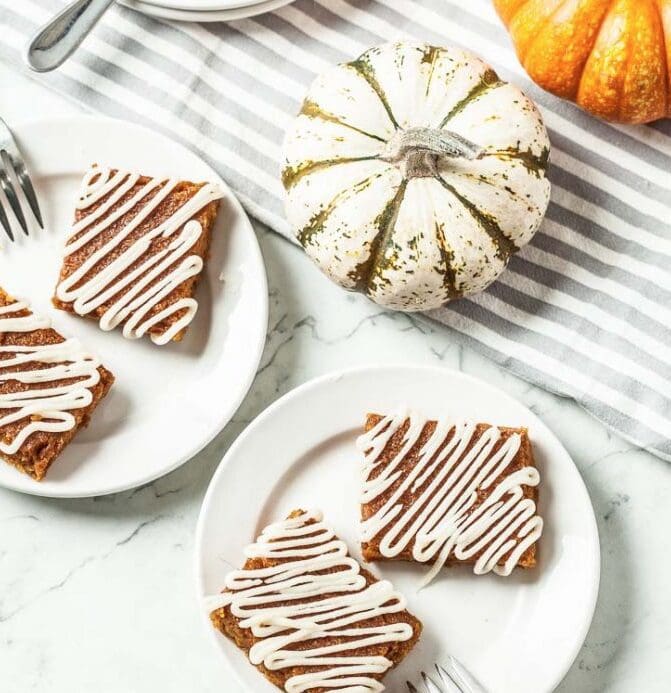
Paleo Pumpkin Pie Bars
I love these sugar, dairy and gluten-free bars that taste like pumpkin pie. You can Dairy-free, paleo-friendly and tastes just like pumpkin pie! You can eat them plain or dress them up with a non-inflammation producing icing.
The Filling Ingredients:
- 2 ½ cups organic pumpkin pureed (canned or whole, baked and pureed)
- 2/3 cup canned full-fat organic coconut milk (or almond, hazel nut, sesame seed, flax milk)
- 4 pastured eggs, whisked
- 10 drops liquid monk fruit
- 2 tsp. pure vanilla extract
- 4 tsp. pumpkin pie spice mixture
- 1 tsp. fresh grated ginger root
- 1 tsp. baking soda
- ½ tsp. ground cardamom
- ¼ tsp. sea salt
The Topping Ingredients (optional):
- ½ cup coconut butter, melted
- ½ tsp. pumpkin pie spice mixture
- ½ tsp. fresh grated ginger root
- ½ cup raw organic pecans, finely chopped
The Crust Ingredients:
- 3 cups fine almond flour
- 1 cup raw organic pecans, finely chopped
- 1 TBSP. pumpkin pie spice mixture
- 1 tsp. baking soda
- Pinch of sea salt
- 6 Tbsp. organic ghee, melted
- 10 drops liquid monk fruit
- 2 tsp. pure vanilla extract
Directions:
- Preheat oven to 350ºF.
- Combine all of the dry ingredients for the crust in a bowl and mix until a dough forms.
- Line a 13×9 inch pan with parchment paper. Press the crust dough into the pan with fingers. Bake for 10 minutes in oven.
- Next stir all of the filling ingredients together in a medium bowl.
- Pour the filling into the pan with the cooled crust.
- Bake for 30 minutes until a knife inserted into the middle comes out clean.
- Allow the bars to cool for at least 20 minutes, or overnight, before serving.
For the topping: Melt the coconut butter on the stove top. Remove from the heat and add the spices, vanilla, and nuts. Stir and drizzle over the bars before serving.